We’ve all had those culinary adventures that pushed our boundaries. Maybe it was a particularly spicy dish, or a texture you weren’t expecting. But what about the truly strange foods, the ones that make you raise an eyebrow and ask, “People actually eat that?” Buckle up, foodies, because we’re about to embark on a global tour of some of the world’s most peculiar and fascinating edible delights.
1. Casu Marzu (Sardinia, Italy): The Cheese with Living Maggots.

Let’s start with a controversial one. Casu Marzu, a Sardinian sheep’s milk cheese, is deliberately infested with live insect larvae. Yes, you read that right. The maggots break down the cheese’s fats, creating a soft, creamy texture and a pungent flavor. The thrill (or terror) comes from the fact that the maggots can jump when disturbed, so eye protection is often recommended. While technically illegal due to health concerns, you might find it on the black market or through local producers.
- Where to try it: If you’re feeling brave (and can find it), seek out local shepherds in Sardinia. Approach with respect and understand the cultural significance of this unique cheese.
2. Sannakji (South Korea): Live Octopus.
If you’re looking for a truly interactive dining experience, Sannakji is for you. This dish involves eating small octopuses that have been freshly killed and lightly seasoned with sesame oil. The tentacles are still wriggling when served, and the suction cups can stick to your mouth and throat, so chew carefully!
- Where to try it: Visit a seafood market or restaurant in South Korea, particularly in coastal cities like Busan.
3. Balut (Philippines): Fertilized Duck Egg.

Balut is a fertilized duck egg that’s incubated for a few weeks before being boiled and eaten. The embryo is partially developed, so you’ll find a beak, feathers, and bones inside. It’s a popular street food in the Philippines and is considered a high-protein snack.
- Where to try it: Look for street vendors or markets in the Philippines. It’s also available in some Southeast Asian communities around the world.
4. Hákarl (Iceland): Fermented Shark.

Hákarl is a national dish of Iceland, and it’s definitely an acquired taste. Greenland shark meat is cured through a fermentation process that takes several months. The result is a pungent, ammonia-rich flavor that’s often described as rotten cheese. It’s typically served in small cubes and chased with a shot of Brennivín, a local schnapps.
- Where to try it: Many restaurants in Iceland, particularly those specializing in traditional cuisine, serve Hákarl. You can also find it at local markets.
5. Witchetty Grub (Australia): A Bush Tucker Staple.

Witchetty grubs are the larvae of certain moths and are a traditional food source for Aboriginal Australians. They’re often eaten raw or lightly cooked, and they’re described as having a nutty, almond-like flavor.
- Where to try it: Participate in an Aboriginal cultural tour in Australia’s Outback. Some restaurants specializing in bush tucker may also offer them.
6. Fried Tarantulas (Cambodia): A Spidery Snack.
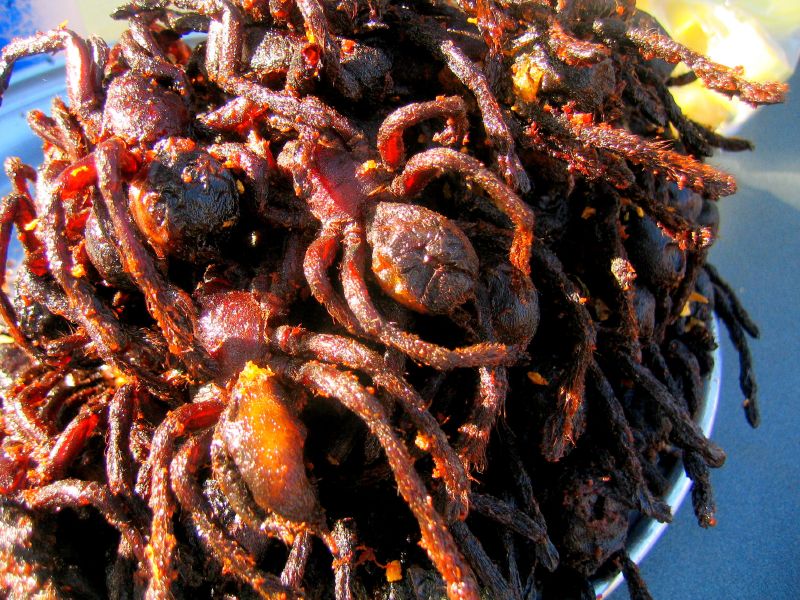
In Cambodia, fried tarantulas are a popular street food. The spiders are usually marinated in garlic and salt before being deep-fried to a crispy golden brown. They’re said to have a taste similar to crab or chicken.
- Where to try it: Visit street food stalls in Cambodia, particularly in the town of Skuon.
A Word of Caution:
Trying these unusual foods can be a thrilling culinary adventure, but it’s essential to be respectful of local customs and traditions. Do your research, ask questions, and be mindful of food safety. And most importantly, have an open mind and a sense of adventure!
Me? Although I am open to trying new things, I think with these choice I might just stick to a good old fashioned cheese burger.
What’s the strangest food you’ve ever tried? Share your experiences in the comments below!





Leave a Reply